|
|
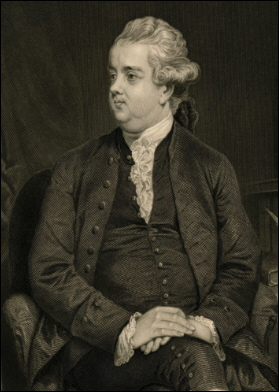
| Edward Gibbon’s The History of the Decline and Fall of the Roman Empire is universally celebrated as a masterpiece of European literature and a towering achievement in historical scholarship. Published between 1776 and 1788 in six volumes, (3980 pages, based on Everyman’s Library, 2010 edition), it remains a landmark text for its majestic prose, ironic wit, and sweeping historical narrative. |
A lively desire of knowing and recording our ancestors so generally prevails that it must depend on the influence of some common principle in the minds of men. Our imagination is always active to enlarge the narrow circle in which Nature has confined us. Fifty or a hundred years may be allotted to an individual; but we stretch forwards beyond death with such hopes as Religion and Philosophy will suggest, and we fill up the silent vacancy that precedes our birth by associating ourselves to the authors of our existence. We seem to have lived in the persons of our forefathers: it is the labour and reward of vanity to extend the term of this ideal longevity; and few there are who can sincerely despise in others an advantage of which they are secretly ambitious to partake. The knowledge of our own family from a remote period will be always esteemed as an abstract pre-eminence since it can never be promiscuously enjoyed, but the longest series of peasants and mechanics would not afford much gratification to the pride of their descendant. We wish to discover our ancestors, but we wish to discover them possessed of ample fortunes, adorned with honourable titles, and holding an eminent rank in the class of hereditary nobles, which has been maintained for the wisest and most beneficial purposes, in almost every climate of the globe, and in almost every form of political society. If any of these have been conspicuous above their equals by personal merit and glorious achievements, the generous feelings of the heart will sympathise in an alliance with such characters; nor does the man exist who would not peruse with warmer curiosity the life of a hero from whom his name and blood were lineally derived. The Satirist may laugh, the Philosopher may preach; but reason herself will respect the prejudices and habits which have been consecrated by the experience of mankind.